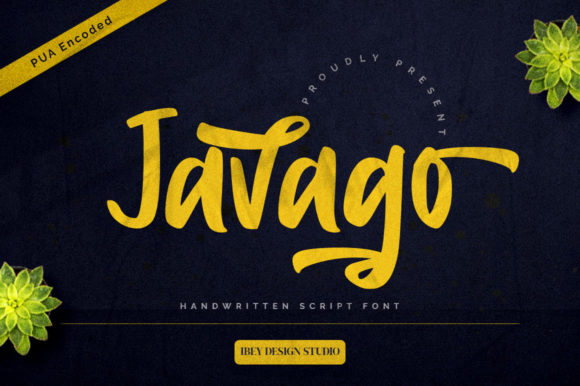
Javago Script: A Friendly Handwritten Font for Digital Brands
As a UI designer who ships landing pages, SaaS dashboards, and boutique e-commerce sites, I test dozens of Script Handwritten fonts each quarter—and Javago Script stands out not because it’s flashy, but because it’s usable. It’s a Fonts choice that balances personality with precision: not too thin (so it holds up on mobile), not too thick (so it breathes in tight layouts), and deliberately varied in stroke rhythm to feel human—not robotic. That “cool, friendly and trendy handwritten font” description isn’t marketing fluff—it’s how Javago Script actually behaves in Figma, Webflow, and Shopify themes.
Javago Script for Hero Headlines and Landing Page Titles
When your hero section needs warmth without sacrificing clarity, Javago Script delivers. Unlike ultra-thin scripts that vanish on 14-inch laptops or heavy brush fonts that overwhelm small viewports, Javago Script has optical balance baked in. I use it at 48–64px for primary headlines on coaching websites and creative agency homepages—always paired with a clean sans serif like Inter or Manrope for body copy. The PUA encoding means ligatures and stylistic alternates load reliably across browsers, so “Welcome” or “Let’s Begin” renders consistently—not as broken glyphs or fallbacks. On dark backgrounds, I add subtle letter-spacing (+0.5px) and a soft white drop shadow for contrast; on light overlays, I reduce opacity to 92% to preserve texture without washing out.
Javago Script for Online Store Banners and Product Launch Graphics
E-commerce designers know: banner text must convert *and* charm. Javago Script works exceptionally well for limited-time offers (“Summer Sale Starts Now”), boutique product names (“Haven Candle Co.”), or handcrafted collection headers. Its even weight distribution prevents visual “clumping” at smaller sizes (32–40px), and its open counters keep letters legible even over busy lifestyle photography. As a Script Handwritten font, it signals authenticity—critical for handmade goods, wellness brands, or indie beauty labels. Just avoid using it for pricing or bullet points; reserve it for emotional hooks only. For Shopify banners, I export SVG text with embedded Javago Script rather than relying on @font-face loading delays—ensuring instant visual impact above the fold.
Javago Script for Brand Identity Kits and Digital Logo Text
If you’re building a brand kit for a client—or launching your own digital product—Javago Script serves as expressive logo typography that scales cleanly from favicon to full-width hero. It’s not a monoline script, so it avoids looking sterile or dated. Its natural variation in stroke width adds dimension without requiring manual vector tweaks. When used for wordmarks (e.g., “The Grove Studio”), I pair it with a neutral geometric sans for taglines (“Design • Strategy • Clarity”) to ground the energy. Because Javago Script is PUA encoded, alternate characters (like swash capitals or contextual ‘t’ endings) are accessible via OpenType features in Figma or Adobe apps—no need for separate font files. That flexibility makes it a smart investment for designers licensing assets for client deliverables.
Javago Script for Blog Headers and Newsletter Subject Lines
Readers scroll fast—but they pause for voice. Javago Script injects tonal consistency into blog headers, email subject lines, and Substack banners where personality drives opens and engagement. Try it at 36px for H2s in long-form content (paired with 18px Roboto for readability), or shrink it to 28px for newsletter preheaders. Its friendly cadence subtly reassures readers before they commit to reading—especially effective for mental wellness, education, or creative entrepreneurship blogs. On mobile, I constrain Javago Script to single-line headers only and test line-height at 1.15 to prevent crowding. Never stretch or skew it—its charm lives in its natural proportions.
Javago Script for App Onboarding Screens and Micro-Interactions
In mobile-first UI design, microcopy carries emotional weight. Javago Script shines in welcome screens (“Hey there! 👋”), empty states (“Add your first project”), and celebratory modals (“You’re all set!”). Its balanced thickness ensures legibility on OLED displays, and its friendly rhythm softens functional interfaces—ideal for meditation apps, habit trackers, or creative tools. Use it sparingly: once per screen, max. Always pair with system UI fonts (SF Pro, Segoe UI) for buttons and inputs to maintain accessibility and WCAG contrast ratios. Since Javago Script is a Fonts file with PUA support, you can embed it in React Native or Flutter via custom font loading—just verify license coverage for app distribution.
Javago Script for Portfolio Websites and Creative Freelancer Branding
Your portfolio is your most important sales page—and Javago Script helps signal creativity without sacrificing professionalism. I use it for section dividers (“Work”, “Process”, “Hello”), project titles (“Oak & Ember Branding”), and signature blocks. Its “trendy handwritten” quality feels current but not fleeting; its moderate contrast avoids looking like a trend-chasing novelty. For responsive portfolios, I serve Javago Script as a WOFF2 webfont with font-display: swap, and include a system-ui fallback for legacy browsers. And yes—it’s licensed for commercial use: safe for client websites, digital templates, and SaaS dashboard branding, provided you’ve purchased the full desktop + web license.
Javago Script for Social Media Graphics and Digital Ads
On Instagram carousels or LinkedIn ad creatives, Javago Script creates instant tonal alignment—especially for service-based creators, course sellers, or local studios. Its even weight ensures crisp rendering at thumbnail size (720x1280), and its friendly energy boosts CTR on warm, benefit-driven copy (“Your First Session Is On Us”). Avoid stacking it with other decorative fonts; let Javago Script anchor the message while supporting type stays neutral. Export static graphics as PNGs with embedded Javago Script—no webfont dependencies, no rendering surprises. As a Script Handwritten option, it outperforms generic script fonts in memorability and perceived approachability.